Executive Summary
This whitepaper presents a practical, implementation-focused approach to designing and operating scalable digital infrastructure. It draws on modern cloud-native design patterns, operational reliability practices, and incremental delivery strategies to help engineering leaders and architects make informed decisions that balance speed, cost, and risk.
Key takeaways
- Adopt modular architecture and clear ownership boundaries to enable teams to move independently while maintaining system coherence.
- Design for failure: use redundancy, graceful degradation, and automated recovery to preserve user experience under stress.
- Prioritize observability and actionable telemetry to shorten incident detection and resolution cycles.
- Use progressive delivery and feature flags to reduce release risk and validate assumptions with production traffic.
Scope and audience
The document is aimed at technical leaders, platform teams, and architects who are responsible for guiding product roadmaps and infrastructure investment. It is intentionally pragmatic: each section includes concrete patterns, trade-offs, and suggested starting points for pilots and rollouts.
Architecture Principles
Structure systems as composable services with explicit contracts. Favor asynchronous integration where possible to increase resilience and decouple latency-sensitive flows. Use bounded contexts to map technical boundaries to organizational ownership. Embrace API versioning, consumer-driven contracts, and semantic compatibility checks to reduce coordination overhead during evolution.
Operational Practices
Operational excellence emerges from repeatable processes, automated tooling, and disciplined incident retrospectives. Invest in an SRE-oriented mindset: service-level objectives, error budgets, and runbooks. Automate routine remediation while prioritizing human-in-the-loop escalation for complex, novel issues. Observability requires quality telemetry—high-cardinality correlation identifiers, structured logs, and distributed tracing.
Security and Compliance
Embed security controls early in the lifecycle. Use threat modeling at design time and automated policy checks in CI/CD. Adopt least-privilege IAM principles, centralized secrets management, and continuous vulnerability scanning. For regulated environments, codify compliance requirements as testable checks to avoid late-stage remediation.
Roadmap and Adoption
Begin with a pilot: identify a single product area with measurable business impact and manageable blast radius. Apply the patterns described here, capture metrics, and iterate. Scale successful practices by documenting runbooks and providing platform-as-a-service primitives to reduce friction for product teams. Track outcomes—deployment frequency, lead time, and service reliability indicators—to justify investment and refine priorities.
Appendices include recommended observability stacks, sample service-level objective templates, and migration checklists. Together, these resources provide a toolkit to move from ad hoc solutions to a repeatable, resilient platform approach.
Download Full Report (PDF)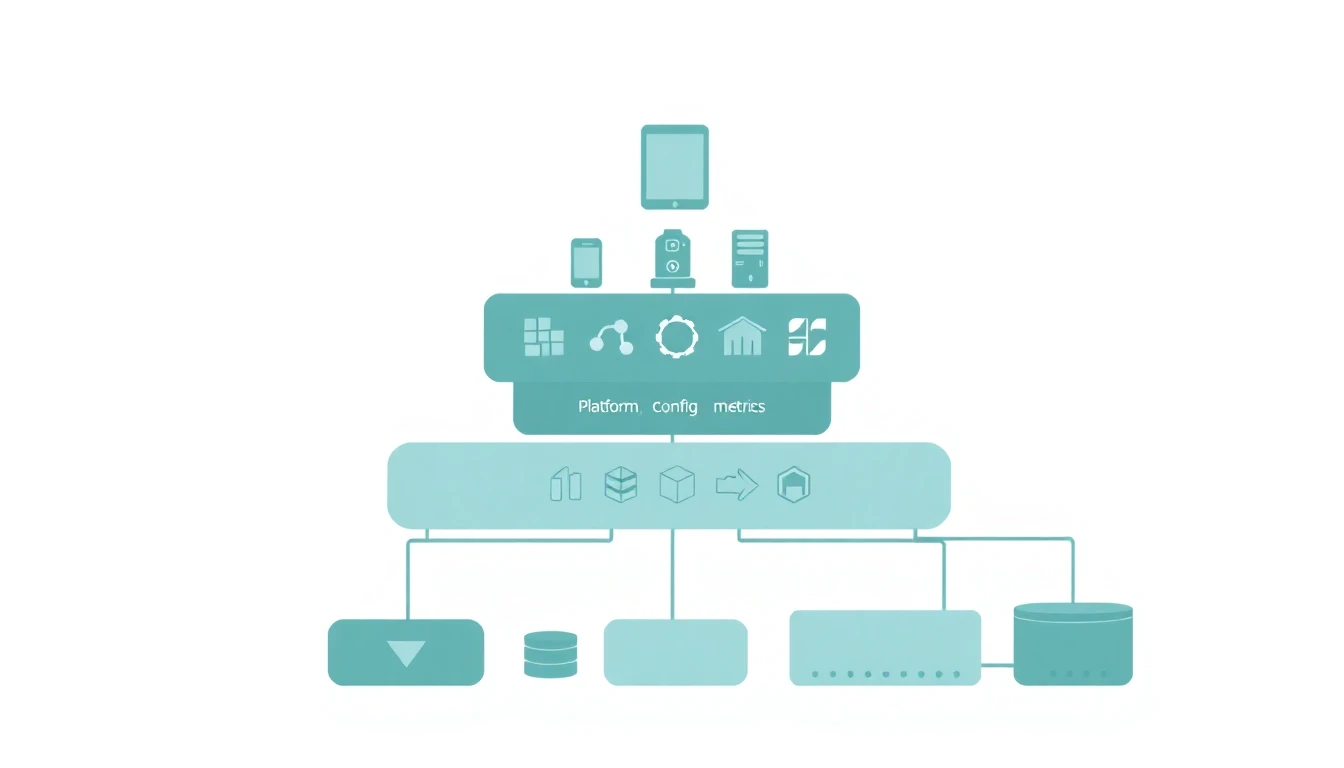
Deep Dive: Implementation Patterns
This section expands on componentization, data management, and operational playbooks. Componentization allows teams to own services end-to-end: design, deploy, monitor, and operate. For data, prefer patterns that separate transactional and analytical workloads—use change data capture and event-driven ingestion to maintain eventual consistency while enabling real-time analytics. Operational playbooks should include escalation paths, prioritized runbooks, and post-incident improvement plans to ensure continuous learning and system hardening.
Sample Component Map
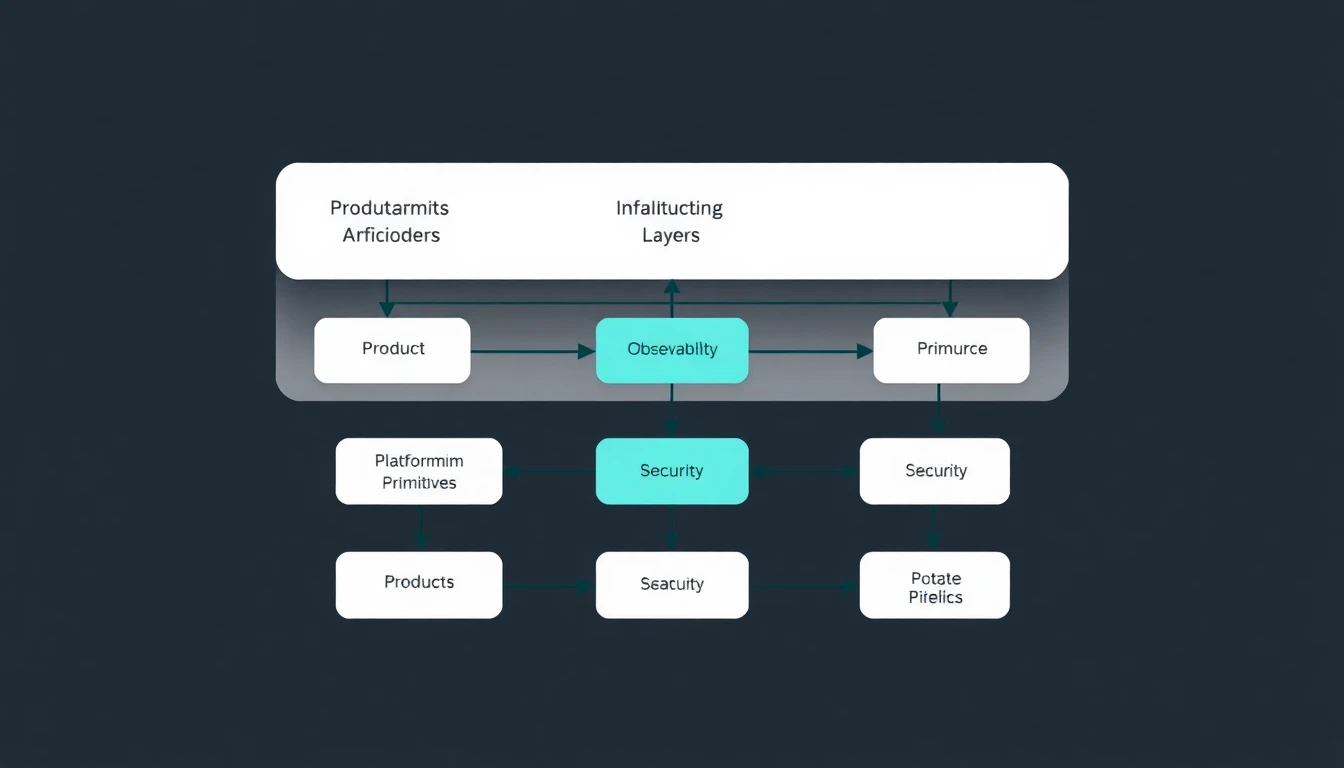
Below is a conceptual diagram that illustrates how product-facing services, platform primitives (auth, config, metrics), and infrastructure services (storage, compute, network) interact. The design emphasizes clear contracts, telemetry boundaries, and fault isolation zones to prevent cascading failures.
Measurement and Outcomes
Define measurable outcomes for each initiative. Use KPIs that align with business goals: uptime for customer-critical services, time-to-recover for operational resilience, and deployment frequency for delivery velocity. Report progress transparently and tie investments to observed improvements.